Marketing Analytics & Conversion Tracking System Rebuild
Building a reliable measurement system for a complex paid-media funnel.

Overview
I rebuilt conversion tracking and marketing measurement for a university professional education division — serving as marketing analytics strategist, GTM administrator, and cross-functional project lead. The scope covered six programs, more than a dozen landing pages, and more than 300 tags, triggers, variables, and configurations across three GTM workspaces, GA4, Google Ads, Meta Ads, LinkedIn Campaign Manager, and Slate CRM. The project took approximately four months to establish a fully workable system, followed by ongoing monthly governance.
Project Snapshot
- Role
- Marketing analytics strategist, GTM administrator, and cross-functional project lead
- Scope
- 6 programs, 12+ landing pages, 300+ configurations, 3 GTM workspaces
- Tools
- GTM, GA4, Google Ads, Meta Ads, LinkedIn Campaign Manager, Slate CRM
- Outcome
- Reliable conversion tracking, stronger campaign optimization signals, and an ongoing tag governance process. This work also made me the department’s go-to resource for GA4, GTM, and conversion-tracking questions.
The Problem
When I joined the organization, none of our most important digital conversion actions were being tracked reliably.
We lacked dependable measurement for request-for-information submissions, scheduled calls with the enrollment team, information-session registrations, enrollment-process clicks, program-specific lead actions, and paid-platform conversions.
The team relied primarily on agency dashboards and enrollments recorded in Slate, the organization’s higher education CRM. Those sources frequently disagreed, sometimes by hundreds of leads.
Website traffic also was not being regularly analyzed. From a paid-media perspective, we were largely flying blind. We could see spend, clicks, and platform activity, but we could not confidently determine which campaigns generated genuine inquiries, which programs and landing pages performed best, which actions represented meaningful funnel progression, where to increase or reduce investment, or whether a performance problem came from the campaign, website, or tracking.
The lack of conversion data was especially damaging in Google Ads because the platform had no reliable signals to optimize toward.
Designing the Measurement System
The first step was deciding what the organization should measure.
Professional education is an expensive, high-consideration purchase. Prospective students rarely move directly from an advertisement to enrollment, so the measurement structure needed to reflect a longer customer journey.
Primary conversion
The primary lead-generation conversion became the request-for-information form submission.
This represented the clearest signal that a prospective student had moved from passive interest into the enrollment funnel.
Supporting conversions
I also tracked actions that indicated meaningful progression: scheduling a call with the enrollment team, registering for an information session, clicking into the enrollment process, beginning program- or course-specific enrollment journeys, and completing enrollments where the data was available.
I made deliberate decisions about which actions should guide campaign optimization and which should remain secondary observations. This prevented platforms from optimizing toward high-volume but lower-value clicks simply because they were easier to generate.
Creating a Program-Specific Taxonomy
The organization offered certificate programs, individual courses, exam-preparation offerings, and multiple enrollment paths. A student could request information about an entire program, enroll in one course, or complete several courses that contributed toward a larger certificate.
The system therefore needed to distinguish between individual offerings while preserving their relationship to the broader program portfolio.
I created a consistent naming structure that identified both the action and the program, such as:
rfi_submit_project_management
Using a combination of URL-based rules, event parameters, and page-specific triggers, I separated conversions by program, course, conversion type, landing page, and funnel stage. This made the data easier to report, interpret, and troubleshoot.
Auditing and Repairing the Existing Setup
The audit uncovered four major categories of problems.
Missing conversion tracking
Many important actions were not tracked at all. This meant campaign platforms lacked the data needed to identify which audiences, keywords, placements, and messages generated genuine leads.
Tags firing incorrectly
Some tags used triggers that were too broad and activated on actions or pages unrelated to the intended conversion.
Tags failing to fire
Other configurations did not activate when the intended action occurred, causing genuine leads to be undercounted.
Duplicate and outdated configurations
In one instance, RFI submissions were counted twice. The environment also contained tags connected to expired campaigns, previous agencies, or unclear owners. Determining what could safely be changed or removed required both technical review and outreach across the university.
Testing and Iteration
Each implementation had to be tested to confirm that it fired after the correct user action, on the correct program page, only the intended number of times, and without activating unrelated conversions.
One early issue involved scheduled-call tracking. I initially attempted to create separate conversions for each program, but the trigger was too broad. Scheduling a call from any program page activated every program’s conversion tag.
After discovering the issue in live data, I quickly corrected it by adding program-specific URL conditions to each trigger.
The experience strengthened my ability to design precise GTM triggers and reinforced the importance of reviewing live data after publication rather than treating implementation as complete once a tag passes an initial test.
Building a Governance Process
Repairing the immediate tracking problems was not enough. Without a repeatable process, the GTM environment would eventually become difficult to manage again.
I partnered with a colleague in technology services to create a shared governance system.
Tag inventory
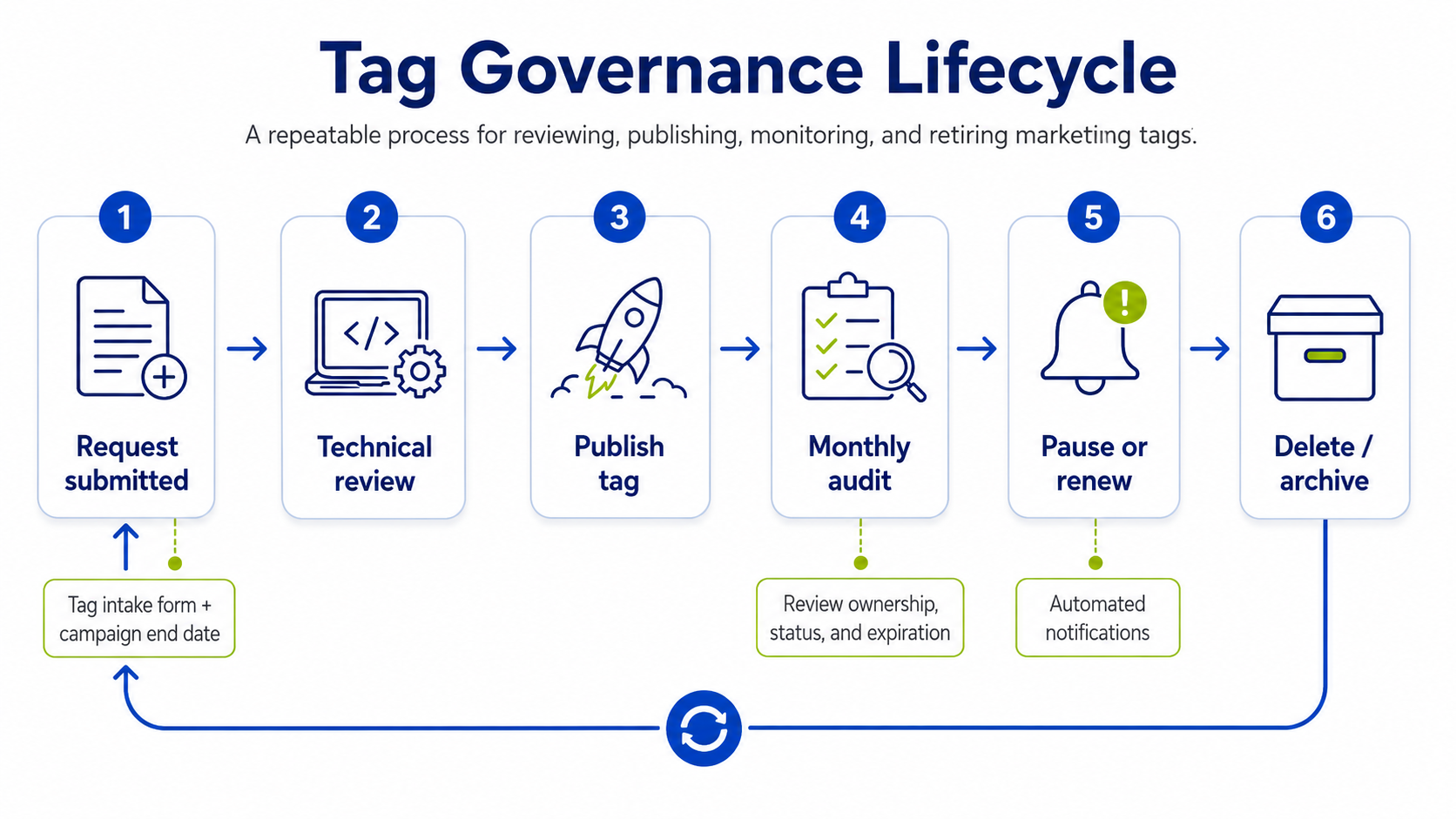
The tracking document captured tag name, platform, owner, business purpose, trigger, associated page or program, campaign, status, dependencies, end date, last audit date, review date, and implementation notes.
I investigated ownership and business need across the university, while my technology-services colleague evaluated technical necessity and implementation risk.
Monthly reviews
We established monthly audits to identify expired campaign tags, configurations approaching review dates, tags with unclear ownership, tags that could be paused or removed, and new implementations requiring documentation.
Intake and lifecycle management
We also created a formal intake form for new tag requests, required campaign end dates, automated notifications when tags approached expiration, review alerts, and pause and deletion notifications. This turned tag management into an ongoing lifecycle rather than an occasional cleanup exercise.
Business Impact
The rebuilt system gave the team a dependable foundation for paid-media decision-making.
We could more confidently compare performance across programs, identify campaigns generating genuine inquiries, evaluate landing-page performance, invest more in what worked, reduce spending on weaker campaigns, distinguish campaign problems from tracking problems, compare platform reporting with CRM outcomes, and evaluate whether agency recommendations improved performance.
This work also created a stronger foundation for lifecycle and funnel analysis by connecting paid acquisition, lead quality, CRM outcomes, and landing-page behavior.
The tracking system did not independently create later gains in lead volume, conversion rate, and cost efficiency. It made those improvements possible by giving us the data required to refine campaign structures, keywords and audiences, budget allocation, messaging, landing pages, bidding strategies, and agency recommendations.
Reliable internal reporting also made it easier to evaluate agency-managed campaigns independently, identify underperforming areas, and prioritize optimization opportunities based on the organization’s own data.
Results
Tracking and measurement rebuilt
Established reliable conversion tracking across six programs and more than a dozen landing pages, covering 300+ audited configurations across three GTM workspaces. Google Ads, Meta, and LinkedIn could now optimize toward meaningful conversion activity.
Governance system created
Built a shared tag inventory, monthly audit process, formal intake workflow, and automated expiration and review notifications — turning tag management into an ongoing lifecycle rather than an occasional cleanup exercise.
Accountability and expanded scope
Internal reporting revealed underperforming agency campaigns not being proactively addressed. I became the department’s go-to resource for GA4, GTM, and conversion questions — including for leaders two and three levels above me.
Reporting discrepancies resolved
Platform dashboards and CRM data had frequently disagreed by hundreds of leads. The rebuilt system created a reliable foundation for comparing channel performance and holding agency work accountable.
What This Project Demonstrates
This project demonstrates my ability to set up and operate a marketing analytics system from strategy through implementation and governance — combining marketing analytics strategy, Google Tag Manager and GA4 expertise, paid-media measurement, technical troubleshooting, cross-functional collaboration, data governance, and agency accountability.